
Working Platform Installations – Thames Estuary
Ecological Impact Assessment
An Ecological Impact Assessment (EcIA) was undertaken and presented potential impacts of the installation of the working platforms on relevant marine ecological receptors. The report contained a description of the existing marine ecological conditions at and adjacent to the site, as well as wider ecological context of the site and its Zone of Influence. It presents an evaluation of the site’s ecological importance, and an assessment of possible impacts in relation to the works at all stages (incorporating embedded mitigation measures in the proposed design).
For these two platform installations, no onsite benthic ecology surveys were necessary as our marine consultants utilised their extensive knowledge of the area and existing data sources to enable a desk-based approach that was considered suitable and detailed enough.
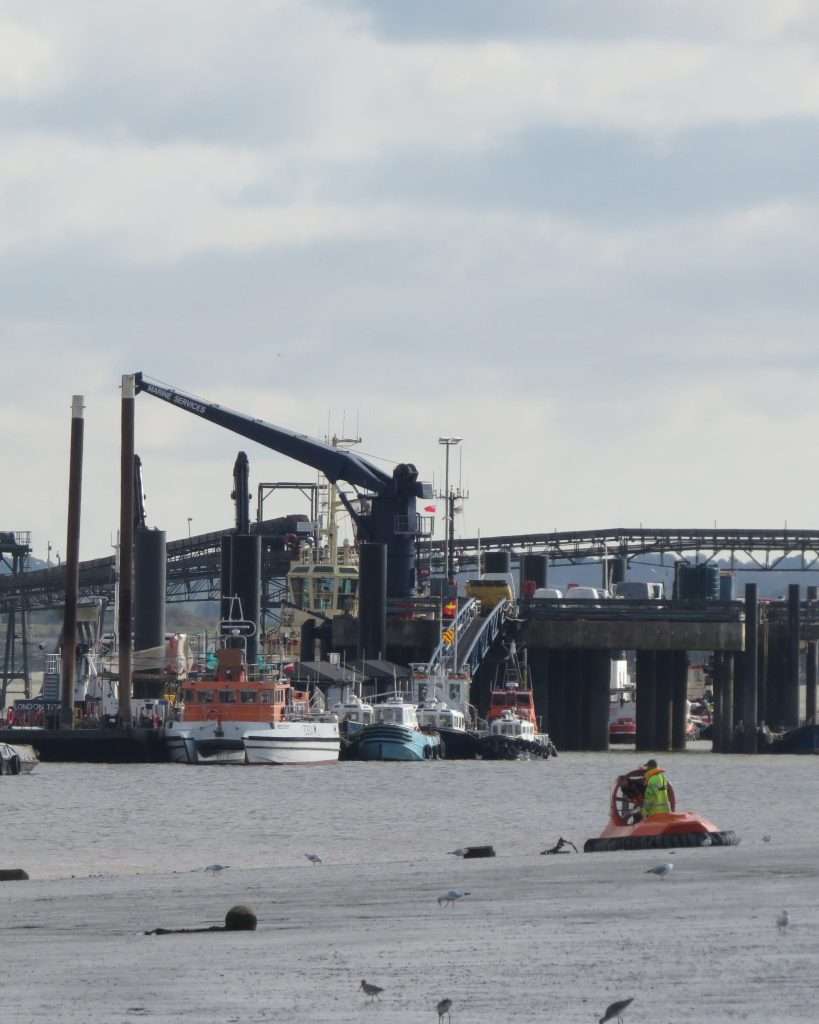
The benthic community assemblage and species diversity of the area in the river Thames where the sites sit was described along with the fish community, including migratory fish species of high importance. The EcIA also considered marine mammals both up and downstream of the sites and their protection status, alongside estuarine birds and their breeding activities over the course of the installation period.
Carcinus’ report included recommendations and commitments that should be considered when the work is undertaken to ensure the project conforms with relevant policy and legislation regarding benthic ecology, fish, marine mammals, and birds. An overall impact assessment on biodiversity during construction and completion stage was then given in conclusion.
Water Framework Directive Assessment
The installations of both working platforms required a Marine Licence, which in turn requires the works to demonstrate compliance with the Water Framework Directive (WFD) (alongside the EcIA). Carcinus’ marine consultants delivered a report for each location giving details on the background information of the works and the WFD legislation, a screening of activities that could impact the status of the overlapping and adjacent WFD waterbodies, scoping of any potential risks to those waterbodies mentioned, and a compliance assessment.
The compliance assessment determines whether the proposed works will have a non-temporary effect on the status of any WFD ‘quality elements’ at the water body scale. A conclusion can then be drawn as to what impact the proposed installations will have on the waterbodies considered, and whether they will prevent the water body status from improving.
More Information
If you would like to learn more about our Marine Environmental Consultancy services, please read and download our Capability Statement, or read about our recent projects below. Alternatively, you can contact us directly.